
Being a consultant is a curious business. You spend years building expertise, polishing frameworks, gathering data, and staying up late with spreadsheets and policy papers. Then you walk into a client meeting, open your mouth, and realise what they really wanted all along was… advice.
The trouble? Advice and expertise are not the same thing.
Advice is quick, digestible, and comforting: “Yes, you’re on the right track.”
Expertise is complex, often uncomfortable, and usually begins with something like: “I’ve seen this before: if you do X, then Y will happen, and you won’t get the outcome you think you want,” or “We should perhaps consider alternative options, because…” (translation: no, seriously, don’t do that).
And guess what? Nobody likes to hear “Don’t.”
Advice vs. Expertise: Fast Food vs. Balanced Diet
Advice tells you what you want to hear.
Expertise tells you what you need to hear.
Advice is like fast food—cheap, tasty, and forgettable.
Expertise is like a balanced diet—healthy, nuanced, and less likely to trend on Instagram.
When you’re a consultant, offering expertise can feel like being the dentist at a children’s party. Nobody thanks you for it, and half the room is sugar-rushing on quick fixes anyway.
ChatGPT in the Advice Box
I put ChatGPT firmly in the advice box. It can be quick, useful, even reassuring — but it isn’t expertise. Expertise requires judgment, context, and skin in the game. It means drawing on lived experience, professional scars, and a willingness to say “don’t” when that’s what needs to be said.
And here’s the thing: I can always tell when someone has leaned too heavily on AI. I can tell when a blog has been padded out by an algorithm, when an MP has let it draft their response, when someone has overly relied on it to write an education module, or when a student has let it ghostwrite their project. How do I know? Maybe it’s the bland smoothness, the absence of bite, the lack of fingerprints. Real expertise leaves scars and fingerprints all over the page. AI, for all its cleverness, leaves a sheen so polished you slide straight off it.
Years ago, I worked on a project to identify the hallmarks of great writing. The biggest predictors weren’t long words or complex grammar, but unusual phrasing and unexpected word choices. That spark of originality, that turn of phrase you didn’t see coming — that’s what makes writing sing. ChatGPT doesn’t really do that. It optimises for the average, the likely next word. The result is competent, even polished, but rarely surprising. And that’s the difference between advice and expertise: one gives you something smooth, the other gives you something you wouldn’t have thought of yourself (I feel another blog coming on).
Understanding that distinction matters, because mistaking advice for expertise doesn’t just flatten the prose — it can cost organisations money, credibility, and, sometimes, survival.
The Backlash Against Expertise
Here’s the real sting in the consultant’s tail: not only do clients often ignore expertise, they actively resent it.
Deliver a warm bit of advice? You’ll be praised as “aligned with our thinking.”
Deliver sharp expertise that begins with “Don’t do that”? You’ll be branded “not a cultural fit.”
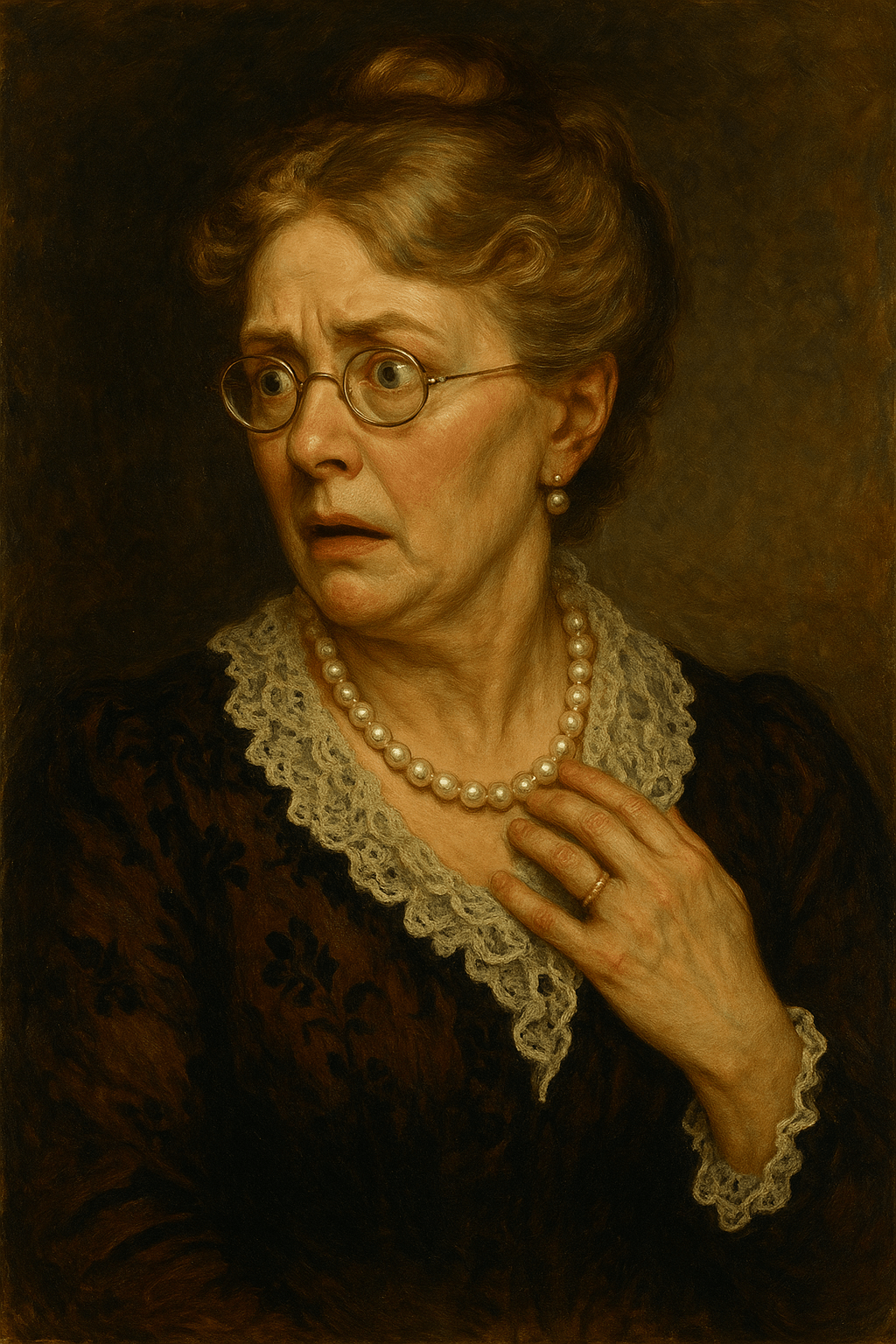
In one case, I was even called “overwrought.” (Translation: I cared a little too much about saving them from their own bad idea.) In response, I naturally reached for my smelling salts, loosened my corset, took to my fainting couch, and when I felt better, I consulted my embroidery.
Consultants rarely get rehired for accuracy. They get rehired for diplomacy. The safe hands. The smiling nods. The PowerPoints that reaffirm the board’s existing bias. The irony is, you can add millions in value by telling a client the truth—but you will lose the contract to someone who tells them they’re already brilliant.
It’s why so many consultants end up playing the role of therapist rather than expert. Because clients don’t want to be fixed. They want to feel validated.
The Consultant’s Dilemma
So here’s the paradox:
If you give advice, you’ll be popular but irrelevant.
If you give expertise, you’ll be accurate but ignored (and possibly not invited back).
Which begs the question: what’s the point of expertise if nobody listens?
The trick, of course, is to smuggle expertise into advice-shaped packaging. Translate nuance into clarity. Frame accuracy in ways that don’t trigger defensiveness. Essentially, dress broccoli up as birthday cake.
Because the hard truth is this: being right isn’t enough. If you want to be heard—and rehired—you have to make your expertise edible. Otherwise, you’ll end up on the sidelines, watching from afar as the project you tried to save collapses in slow motion—proven right, but far too late to matter.
After all, consultants don’t get fired for being wrong. They get fired for being right too soon—and for saying the most unpopular words in the business: “Don’t do that.”
Just ask Angela Rayner
When people don’t like expertise, they don’t abandon the idea. They just go shopping for someone who’ll tell them what they want to hear.
It’s called confirmation bias: the human tendency to collect opinions that validate our worldview and quietly bin the ones that challenge it.
That’s why one consultant’s “Don’t do that” quickly becomes another consultant’s “Great idea!” The client beams, relief floods the room, and the second consultant walks away with the contract—while you walk away with your integrity (and an empty diary).
And then, of course, you get to watch from afar as the entire project derails in slow motion. Budgets evaporate, deadlines slide, reputations wobble—while the people who ignored your expertise quietly pretend you were never in the room. In the meantime, they go to war with themselves, blaming each other, rewriting history, and doing everything except admit the simplest truth: they were told not to do it in the first place.
It’s not that people want truth. They want affirmation dressed up as insight. And they’ll keep surfing until they find it.
Just ask Angela Rayner. Faced with a complex property deal, she leaned on legal advice that conveniently confirmed her path. But lawyers aren’t tax specialists, and the advice that felt reassuring at the time turned out to be catastrophically wrong. A £40k stamp duty mistake and a political career stumble later, the lesson is clear: confirmation bias doesn’t just waste budgets—it can blow up reputations.
So here is the paradox:
If you give advice, you’ll be popular but irrelevant.
If you give expertise, you’ll be accurate but ignored (and possibly not invited back).
Which begs the question: what’s the point of expertise if nobody listens?
The trick, of course, is to smuggle expertise into advice-shaped packaging. Translate nuance into clarity. Frame accuracy in ways that don’t trigger defensiveness. Essentially, dress broccoli up as birthday cake.
Knowing When to Walk (Run) Away
Of course, there’s one more unspoken skill in consulting: knowing when to walk away. Or, more accurately, when to run.
If a client has made it clear they don’t want expertise—only affirmation—you can waste months trying to dress truth up as advice, or you can recognise the signs early and save yourself the slow-motion car crash. Sometimes the bravest, smartest thing a consultant can do is close the laptop, smile politely, and let someone else nod along to disaster.
Because the hard truth is this: being right isn not enough. If you want to be heard—and rehired—you have to make your expertise edible. Otherwise, you’ll end up on the sidelines, watching from afar as the project you tried to save collapses in slow motion—proven right, but far too late to matter.
After all, consultants don’t really ever get fired. They just get ‘quietly’ replaced by someone with a warmer smile, a softer nod, and the willingness to say “Great idea!” instead of “Don’t do that.”
 Academic Hub